Since
its opening in 1997, the Bermuda Underwater Exploration
Institute (BUEI) has been helping to educate visitors about the mysteries of
the ocean and providing a fascinating opportunity to see many items of treasure that have been retrieved from some of the 300 plus shipwrecks found in the waters surrounding Bermuda.

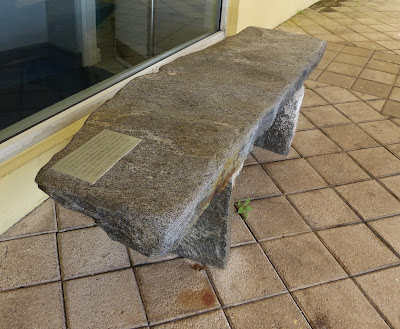
 Interactive display areas show the geological history of the islands, illustrating their formation by extensive volcanic activity occurring approximately 33 million years ago.
  A display of various suits, helmets and bells illustrate devolpments in the history of diving, ranging from a replica of Edmund Halley's diving bell to a modern day Exo-suit.


Exo-suits are similar to an astronaut's suit and enable divers to achieve greater depths, without the need for lengthy decompression times. They have been used in the rescue of stranded submariners.
An exhibit showing invasive species concentrates primarily on Lionfish, which are native to the Indo-Pacific but are now established along
the southeast coast of the U.S., the Caribbean, Bermuda, and parts of
the Gulf of Mexico.They have very few
natural predators in Atlantic waters and have the potential to decimate
native fish populations and ecosystems. Experts believe that the indiscriminate release of unwanted aquarium fish is responsible for their presence in the Atlantic.There is a culling programme in operation in Bermuda and residents are encouraged to "eat them to beat them", with hunting tournaments organised in a bid to reduce the Lionfish population.
The Lightbourn Shell Collection houses an impressive variety of shells, presented to the BUEI by local onchologist Jack Lightbourn. His private collection is one of the largest in the world.
The Shipwreck Gallery and Treasure Room offer a glimpse into marine history with their exhibits of ancient artifacts, recovered by world renowned shipwreck diver Teddy Tucker.


The emerald-studded 22 karat gold Tucker's Cross was discovered by
Teddy Tucker in 1955. Believed to have come from the 1594 shipwreck of the San Pedro, it came to be considered the most valuable single
object ever found in a shipwreck. Tucker sold it to the Government of Bermuda in
1959 so that it would remain on the island. It was kept in a museum run by the Tucker family on behalf of the Government. Just prior to Queen Elizabeth II's planned visit to
the museum, it was discovered that the Cross had been stolen and a replica left
in its place. The Cross has never been found.
More information about Teddy Tucker
here
Thanks for visiting my blog, I hope you've enjoyed the photos.
Click here for the next instalment.


 Interactive display areas show the geological history of the islands, illustrating their formation by extensive volcanic activity occurring approximately 33 million years ago.


